"The band"
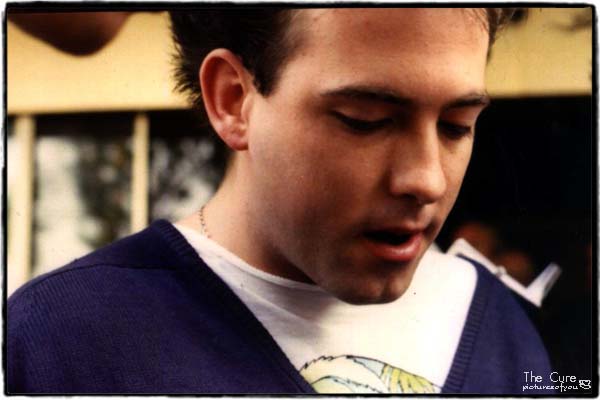 I've always found the relationship between commercialism and art intriguing. So much that is commercial is so disposable and crass, that when something artisticly intact but also commercial breaks through, I'm intrigued. How does that work? What's the secret?
I read an interesting interview this morning with Robert Smith of The Cure.
We did an album in '96 [Wild Mood Swings] and we had a song on there called ''Mint Car'' — it was the single, and I thought it was a better song than ''Friday, I'm in Love.'' But it did absolutely nothing because we weren't the band at that time. The zeitgeist wasn't right. It taught me that sometimes there's a tipping point, and if you're the band, you're the band, even if you don't want to be, and there's nothing you can do about it.He has confirmed something I've suspected for some time. Nobody knows. If they did know, then they would keep producing quality artistic work that also appeals to the masses, but . . . they don't know how. So instead, populist culture is dominated by nonsense, very little of which will stand the test of time. The benchmark by which I judge the merit or worth of popular culture, whether it's books, music, art - whatever - is the time test.
Will people watch this movie, or read this book or listen to this music in 200 years time? If the answer is yes, then you know you have something of real value. Will Brittany Spears be anything other than a footnote in the dusty pages of an account of the few years at the beginning of the 21st century? Almost certainly not, because catchy as her tunes are (or rather the tunes her songwriters handed her), they have no real value, say nothing about life and don't contribute to the body of work that helps human beings understand and explain the experience of being human.
(For the record, I'm a big pop fan, and catchy pop tunes are important, but pop can be done well and it can be done badly. Most is done badly and is barely memorable, let alone great.)
So what's the conclusion? I think it is that you can't have commercial considerations in your mind when embarking on anything creative. If you do, it's not exactly doomed to failure, but it 's compromised, and is not going to get there easily. Unless like Bob Smith implies above, you happen to be The Band (or The Writer, Poet, etc etc) in which case, your least commerical work will get enough attention to render it notable.
Commercial work is rarely creatively great, but truly great creative work is always commercially succesful. It might take a while to be recognised, but it always is.
"And every time i try to pick it up
like falling sand
as fast as i pick it up
it runs away through my clutching hands
but there's nothing else i can really do
there's nothing else
i can really do
at all. . ."
A Letter to Elise, Wish, The Cure, 1992
posted by Alex Meehan @ 1:23 PM



3 Comments:
Bob Dylan... he'll survive the test of time.
Hence the Jack Johnsons, Sophie Ellis Bexters and Oasises of our time.
Indeed.
On another note, congratulations again on your fantastic news Jon, and I've only just figured out you had a blog. Update, my good man, update!!!
Bob Dylan... he'll survive the test of time.
Exactly.
Post a Comment
<< Home